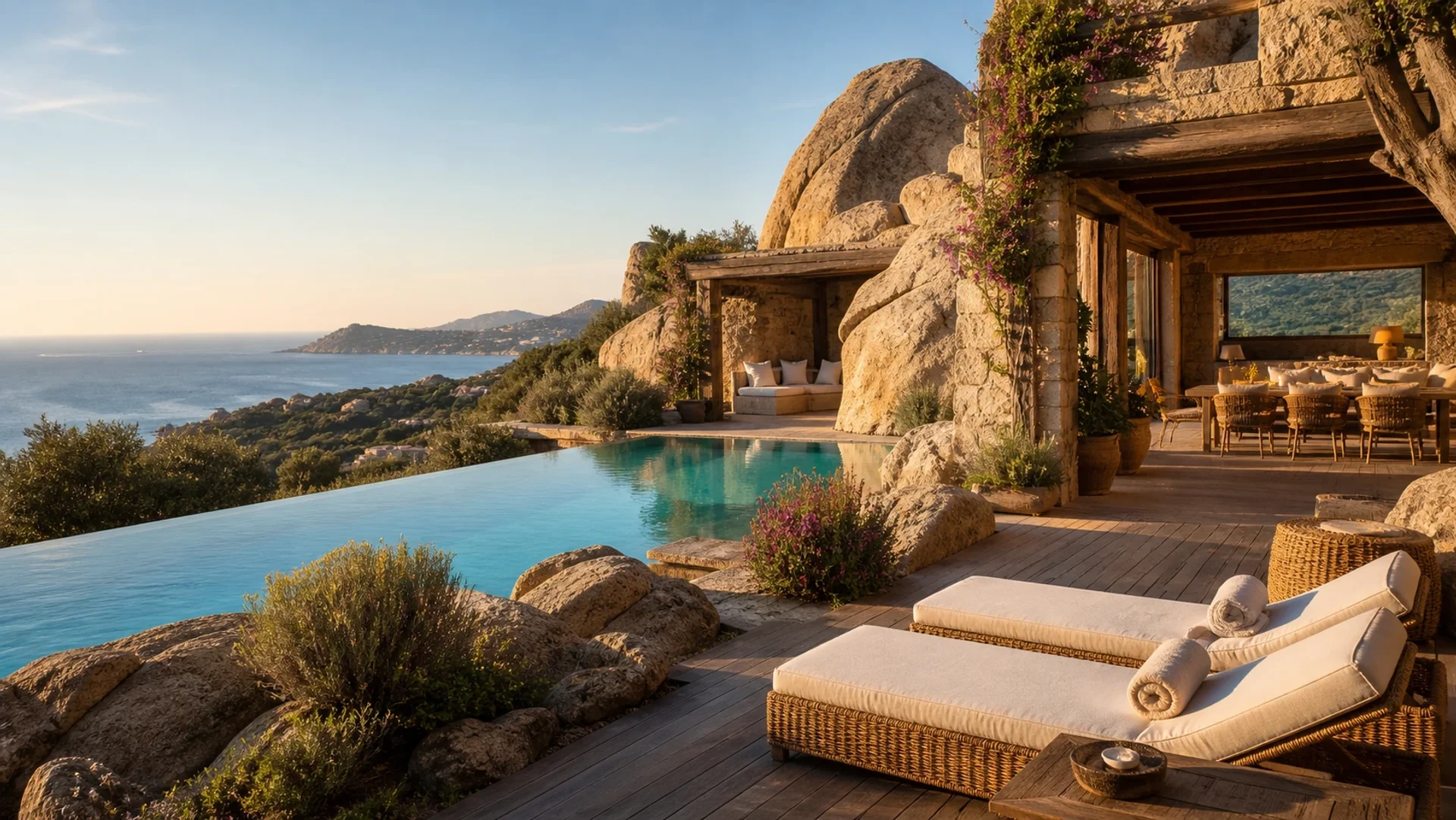
Italy · Mediterranean
Custom Bali Furniture for Costa Smeralda
Produced in the workshop in Kerobokan, Bali, and shipped door to door by the workshop and its freight forwarders. Typical ocean transit of 25 to 35 days.
Italy, Mediterranean
The market
The Costa Smeralda is among Mediterranean Europe's most exclusive hospitality markets, anchored by Cala di Volpe (Marriott), Romazzino, Cervo, and ultra-private villas in Porto Cervo, Pevero, and Romazzino. The Aga Khan-developed coast includes approximately 50 luxury hotel properties and several thousand private villas, with rental rates exceeding €30,000 per week in peak season. Beyond Costa Smeralda, the broader Sardinian luxury market includes Forte Village (south coast), Capo Caccia (Alghero area), and emerging boutique villa developments. Furniture specification for Sardinian luxury hospitality has converged on natural materials, teak, granite, leather, with strong continuity to the broader Mediterranean design language.
Shipping & logistics
From Bali to Costa Smeralda, the practical details.
- Typical transit time
- 25 to 35 days
- Departure port
- Benoa, Bali
- Arrival port
- Genoa or Civitavecchia, Italy
- Standard incoterms
- CIF Genoa or CIF Civitavecchia with onward delivery
- Furniture import duty
- 0% on most solid wood furniture (standard EU rates); rattan and bamboo categories up to 5.6%, confirmed by HS classification before shipment
- VAT / local tax
- 22% Italian IVA applies on duty-inclusive value
Direct services from Benoa to Italian Mediterranean ports operate via Suez Canal routing, typically 25 to 35 days transit. Genoa and Civitavecchia handle major furniture cargo for Italian distribution. From mainland Italy, Sardinian destinations require ferry transit (Olbia or Porto Torres) typically adding 1 to 2 days, plus road delivery to Costa Smeralda properties. Indicative total Bali-to-Costa Smeralda timing including inter-island ferry is 27 to 38 days.
Customs & import notes
Furniture imported from Indonesia enters the EU at standard EU rates determined by HS classification. Most solid wood furniture under chapter 94 (HS 9403.60 and neighbouring lines) enters at 0% duty; rattan and bamboo categories (HS 9403.82, 9403.83) can carry up to 5.6%. HS classification is confirmed before each shipment. The EU-Indonesia trade agreement (CEPA) is expected to remove remaining duties on Indonesian furniture once in force; the agreement was concluded in September 2025 and is not yet signed, and its entry into force is targeted for January 1, 2027. Standard 22% Italian IVA (VAT) applies on the duty-inclusive landed value. Wooden furniture from Indonesia needs a FLEGT licence, issued on the Indonesian SVLK timber legality system; rattan and bamboo pieces are outside the scheme. From December 30, 2026, the EU Deforestation Regulation also applies to wooden furniture: the operator placing it on the EU market files a due diligence statement with the geolocation of the plots where the wood grew. Documentation in English is accepted; Italian documentation may be required for specific procedures.
Climate considerations
Mediterranean, hot dry summers (28 to 35°C) and mild wet winters (10 to 15°C), with intense summer UV moderated by lower humidity than tropical destinations.
- Mediterranean climate, hot dry summers (28 to 35°C) and mild wet winters (10 to 15°C)
- UV index 9 to 10 in summer, 4 to 6 in winter; lower than tropical destinations
- Salt-air exposure on direct coast properties is moderate; protected bay locations (Pevero, Romazzino) have low exposure
- Mistral wind events in winter can stress outdoor furniture; secured installation recommended
Recommended materials for Costa Smeralda
A-Grade Plantation Teak (Mediterranean outdoor)
Teak performs excellently in Mediterranean conditions. Costa Smeralda's hot dry summers and mild winters are well-suited to teak's natural properties; UV exposure is intense in July to August but absence of constant rain or salt spray means lower maintenance than tropical applications. Pool decks, terrace dining sets, beach club furniture. Annual teak oil maintains the golden-brown finish; many Sardinian villa owners prefer the silver-grey weathered patina that typically develops within 18 months.
Reclaimed Teak (statement pieces)
Reclaimed teak's heritage character resonates strongly with Sardinian design culture, which values authenticity and material provenance. Statement dining tables, lobby installations, library shelving, custom bar fronts in resort F&B environments.
Volcanic Stone (Paras), indoor
Paras stone aligns with the Sardinian granite-and-stone interior design tradition. Bathroom basins, kitchen counters, statement dining tables, lobby reception desks. The material's heat absorption makes it more suited to indoor or shaded outdoor applications in Sardinian summer than direct sun exposure.
Why Balinese furniture works for Sardinia
Mediterranean climate (hot dry summers, mild wet winters) suits teak and stone exceptionally well. The Sardinian luxury design language emphasises natural materials with character, where Indonesian teak’s grain density and reclaimed teak’s heritage provenance align directly with what Costa Smeralda interior designers specify.
Inter-island delivery from Genoa or Civitavecchia typically adds 3 to 5 days via ferry to Olbia or Porto Torres, plus final road delivery to Porto Cervo, Pevero, or Romazzino. The workshop’s freight forwarder handles the chain with customs brokers at Genoa or Civitavecchia.
What a typical Costa Smeralda hospitality project would include
Illustrative example. Costa Smeralda projects sit firmly at the ultra-luxury end of the Mediterranean market. A resort renovation at Cala di Volpe, Romazzino, or Pevero scale (50 to 100+ keys) would typically encompass full bedroom FF&E refreshes, signature restaurant fit-outs, and large pool and beach club commissions. A private villa commission in Porto Cervo or one of the gated estates (often 6 to 12 bedrooms with separate guest pavilions) would include indoor and outdoor dining for 12 to 20 covers, multiple lounge zones, master and guest bedroom sets, and stone or teak feature pieces for terrace and infinity-pool settings. Costa Rei boutique villas would scale these volumes down by roughly half while emphasising the same material palette.
Furniture considerations for Sardinia climate
Engineer outdoor pieces to handle scirocco gusts. The Sahara-bred southerly wind hits the Costa Smeralda coast unpredictably between May and October and can move lightweight terrace furniture across an entire pool deck. Specify heavy teak or stone frames for any furniture that lives on exposed terraces, and plan anchor points for parasols and umbrella bases.
Plan for extreme summer interior heat as well as terrace UV. Granite-and-stone villas absorb heat slowly, but interiors regularly reach 32 to 35°C during July and August. High-density heat-stable upholstery foams (CMHR grade) and finishes that resist softening above 40°C matter more here than in cooler-summer Mediterranean destinations. Wax-based finishes on indoor wood go tacky in peak heat and should be avoided.
Match teak finish strategy to the design language. Sardinian interior design culture leans into authentic patina, the silver-grey weathered tone that typically develops within 18 months is widely accepted and often specified deliberately. For owners who want the warm golden tone preserved, annual oiling is straightforward, but the brief should set this expectation clearly so the maintenance budget reflects the choice.
Buyer checklist for Costa Smeralda projects
- Confirm gate, drive, and inner-courtyard dimensions before committing to large pieces. Most Costa Smeralda properties are gated with narrow access roads, and many cannot accommodate a 40ft truck within 200 metres of the unloading point.
- Book the Olbia ferry slot at least 2 weeks in advance for July and August deliveries. Peak-season ferry capacity from Civitavecchia fills early.
- Add a 3 to 5 day buffer for July and August deliveries: road congestion on the SS125 and SS133bis through the resort cluster can push truck arrivals back a full day per leg.
- Engage a Sardinian-experienced freight forwarder rather than a general Italian one. The inter-island ferry handling and Costa Smeralda last-mile expertise are not standard mainland skills.
- Coordinate with property management or the resort’s procurement team for arrival access windows. Gated estates often restrict deliveries to specific hours.
Questions
Frequently asked questions
How long does it take to get custom furniture from Bali to Costa Smeralda in Sardinia?
Typically 12 to 20 weeks door to door depending on destination, including 8 to 10 weeks of production in the workshop in Bali. These are the workshop's typical lead times, not a commitment from Ubud Atelier. Ocean transit to Genoa or Civitavecchia typically takes 25 to 35 days; the island leg to Costa Smeralda typically adds 3 to 5 days.
What import duty applies to wooden furniture in Sardinia and Costa Smeralda?
Wooden furniture shipped to Costa Smeralda, including seats with wooden frames, enters at 0% customs duty. Rattan and bamboo furniture carries 5.6%, cut to 0% for Indonesian origin under the EU GSP until December 31, 2026; Indonesia leaves the GSP on January 1, 2027. These are standard EU rates, set by HS classification.
Is VAT due on furniture imported into Costa Smeralda, and at what rate?
Yes. Italy charges 22% import VAT (IVA) at customs on furniture shipped to Costa Smeralda, calculated on the customs value plus duty plus transport to the place of destination in the EU. A VAT-registered business recovers it through its return. An indicative customs cost estimate can be prepared at quotation stage.
Which documents are needed to import furniture from Indonesia into Sardinia?
Wooden furniture for Sardinia needs a FLEGT licence, issued on the Indonesian SVLK timber legality system; rattan and bamboo pieces are outside the scheme. From December 30, 2026, the EU Deforestation Regulation also applies to wooden furniture: the operator placing it on the EU market files a due diligence statement with the geolocation of the plots where the wood grew.
Who handles shipping and customs clearance from Bali to Costa Smeralda?
The workshop and its freight forwarder. The forwarder works with customs brokers at Genoa or Civitavecchia, and the shipment continues by ferry to Olbia or Porto Torres. HS classification is confirmed with the freight forwarder before each shipment leaves Bali. Ubud Atelier's role is to introduce the project to the workshop and relay information to the client.
Is solid teak suitable for a hotel or villa on the Costa Smeralda?
Yes. A-grade plantation teak suits Costa Smeralda pool decks and terraces: its natural oils and silica resist moisture and salt air without chemical treatment. Untreated, it typically develops a silver-grey patina within 18 months; annual teak oil keeps the golden tone. Paras stone suits indoor or shaded settings, given its heat absorption in Sardinian summer.
What is the minimum project size for a hotel or villa on the Costa Smeralda?
Hospitality projects on the Costa Smeralda, from a boutique hotel to a resort in Porto Cervo or Romazzino, start from €25,000. A private residence, such as an owner's own villa, starts from €10,000.
How far ahead should a summer delivery to Costa Smeralda be planned?
For July and August deliveries to Costa Smeralda, the Olbia ferry slot is typically booked at least 2 weeks in advance, as peak-season capacity from Civitavecchia fills early. From the Sardinian arrival port, road delivery to Porto Cervo, Pevero or Romazzino properties is straightforward.
Figures checked: September 2026
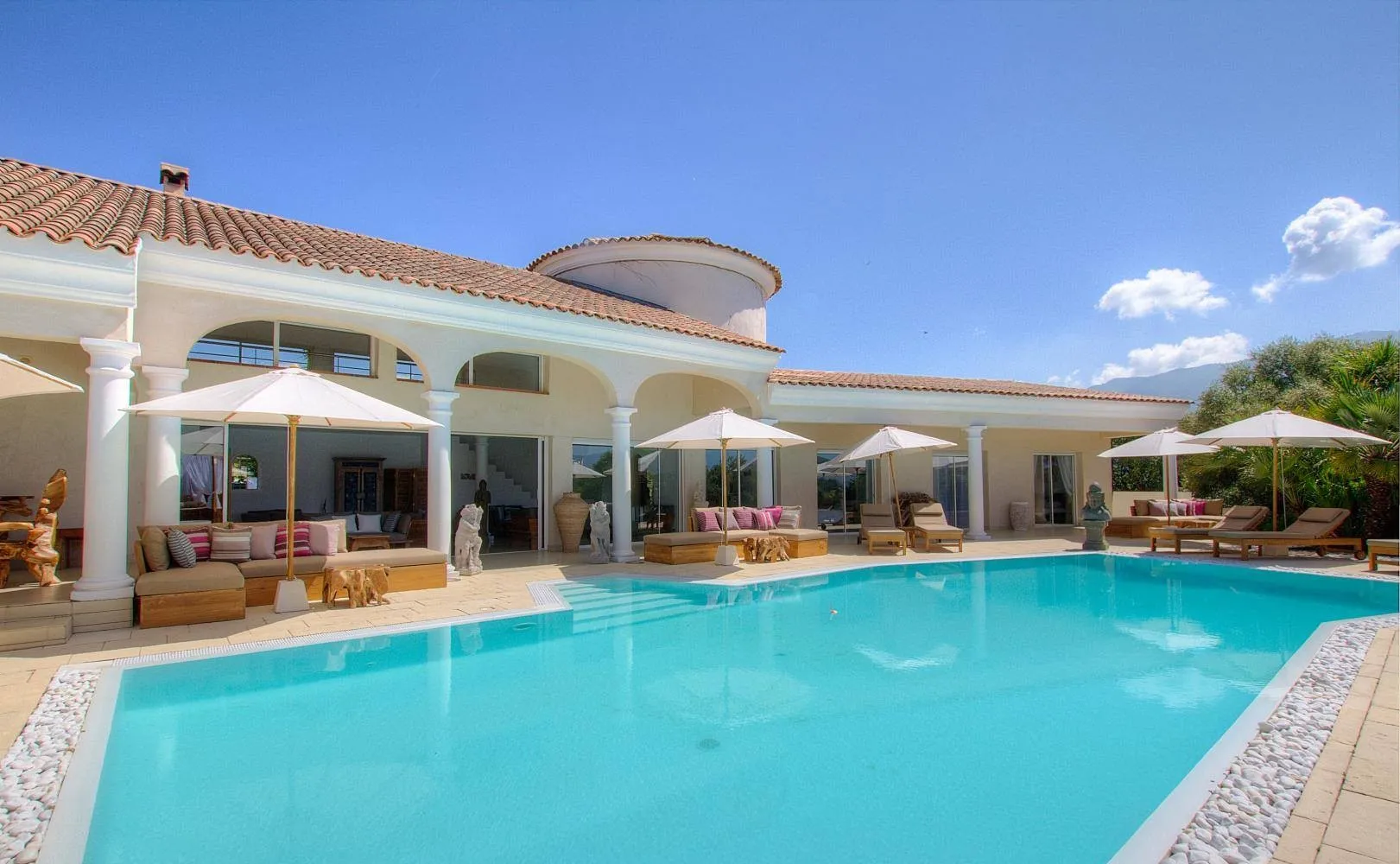
Have a project in Costa Smeralda?
Share the scope, timeline and destination. Ubud Atelier comes back with the workshop's capacity and lead time within 48 hours.