Sourced in Bali
Six core materials.
Approved before production begins.
The workshop works with six core materials. Each one selected for durability, climate behavior, and the way it ages on tropical sites.
INDONESIA · FSC CERTIFIED
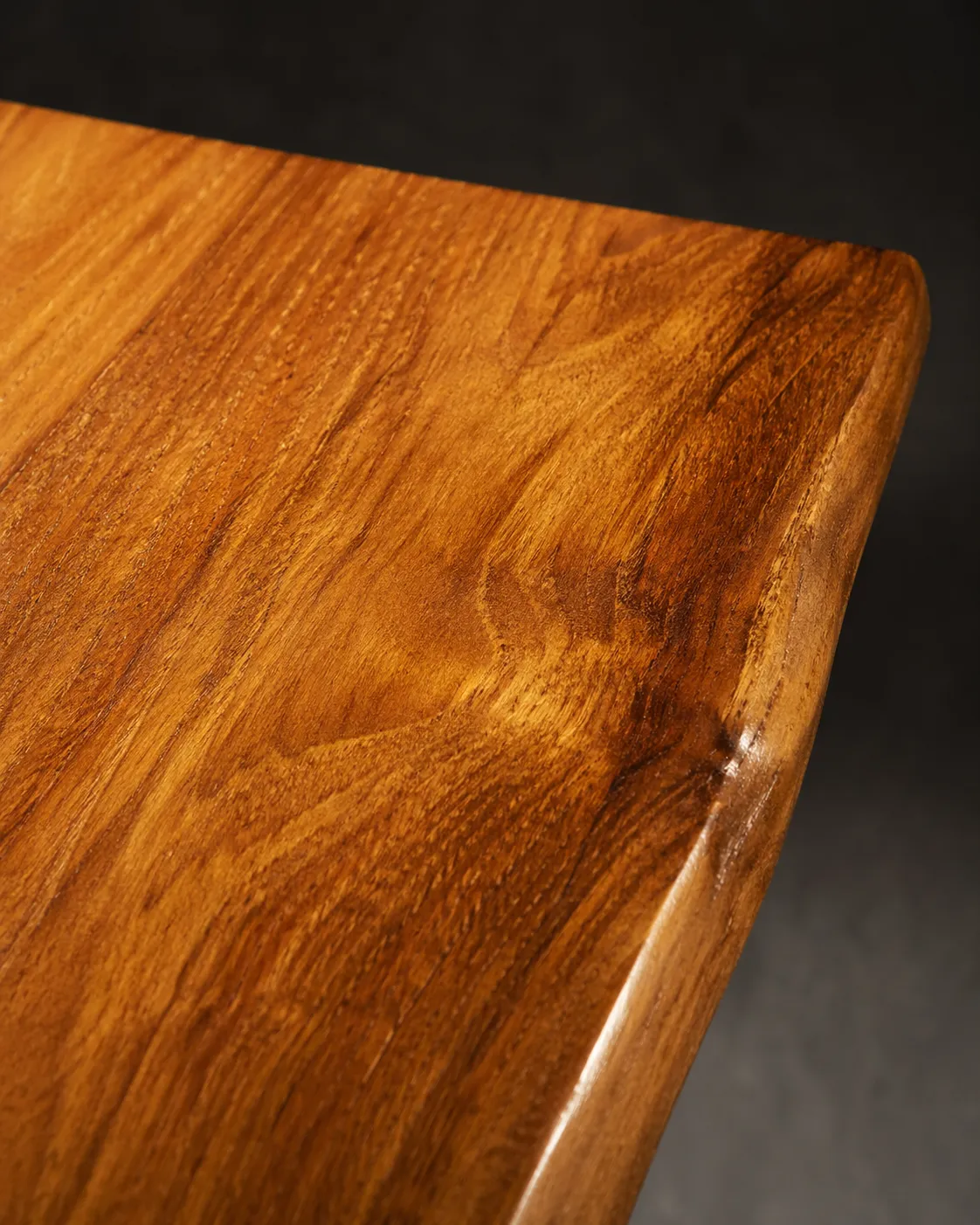
A-Grade Plantation Teak
30 to 50 years · outdoor structural use
Origin & character
Plantation teak grown in FSC-certified forests across Indonesia is the primary structural material in the workshop. At the A-grade level, the timber is selected for tight, uniform grain, high natural oil content and density above 650 kg/m³, the threshold at which teak becomes genuinely weather-resistant rather than merely weather-tolerant.
Performance
The natural silica and oil content of A-grade teak means it resists moisture penetration without chemical treatment, making it particularly suited to marine environments: docks, beach clubs, pool decks and oceanfront terraces where salt air accelerates the degradation of lesser timbers.
Left untreated, plantation teak weathers to a consistent silver-grey within eighteen months. Maintained with annual teak oil application, it retains its warm golden-brown tone indefinitely. Both finishes are valid, the choice is aesthetic, not structural. All teak supplied by Ubud Atelier includes FSC chain-of-custody documentation.
Best applications
- Outdoor dining sets
- Sunbeds & deck chairs
- Structural frames
- Lounge furniture
INDONESIA · 80 TO 200 YEARS OLD
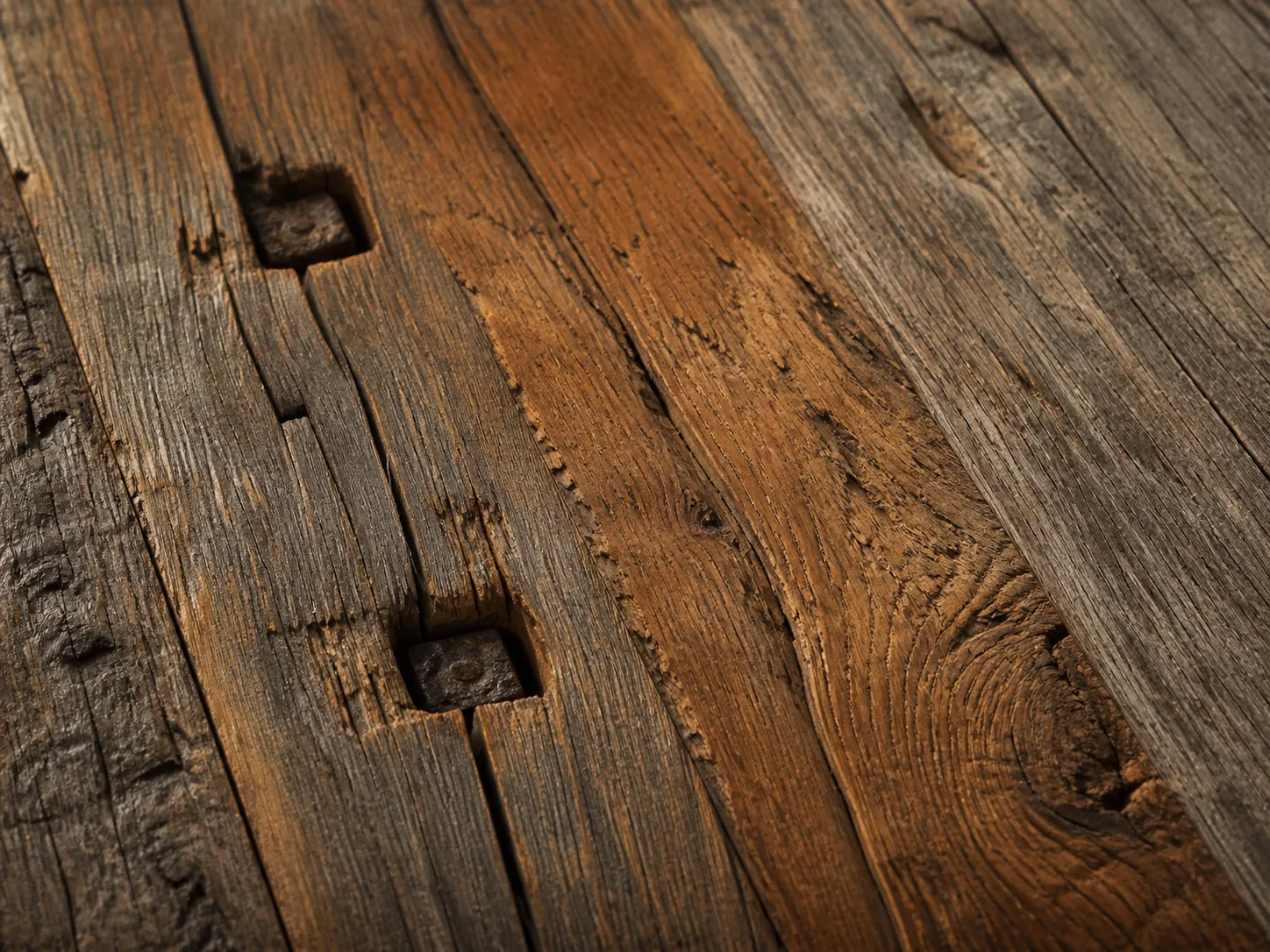
Reclaimed Teak
50+ years · already proven
Origin & character
Reclaimed teak is sourced from the demolition of colonial-era Indonesian buildings: farmhouses, warehouses, bridges and workshop structures built between 1820 and 1940. The timber in these structures was old-growth teak, slower-grown than today's plantation stock, with grain density and natural oil content that modern cultivation cannot replicate.
The character of reclaimed teak, bolt holes, saw marks, age checks, the occasional mortise socket, is treated as a feature, not a defect. Each piece is unique. Before any reclaimed timber enters the workshop, it is assessed for structural integrity: pieces with active rot, sapwood degradation or structural compromise are rejected. Only sound timber proceeds to production.
Performance
From a sustainability standpoint, reclaimed teak has zero new-harvest impact. It carries embodied carbon from a century-old structure and converts it into furniture with a projected lifespan of another fifty years. Carbon footprint certificates can be provided on request for projects with sustainability reporting requirements.
Best applications
- Dining tables
- Bar counters
- Statement headboards
- Feature shelving
INDONESIA · WILD HARVEST
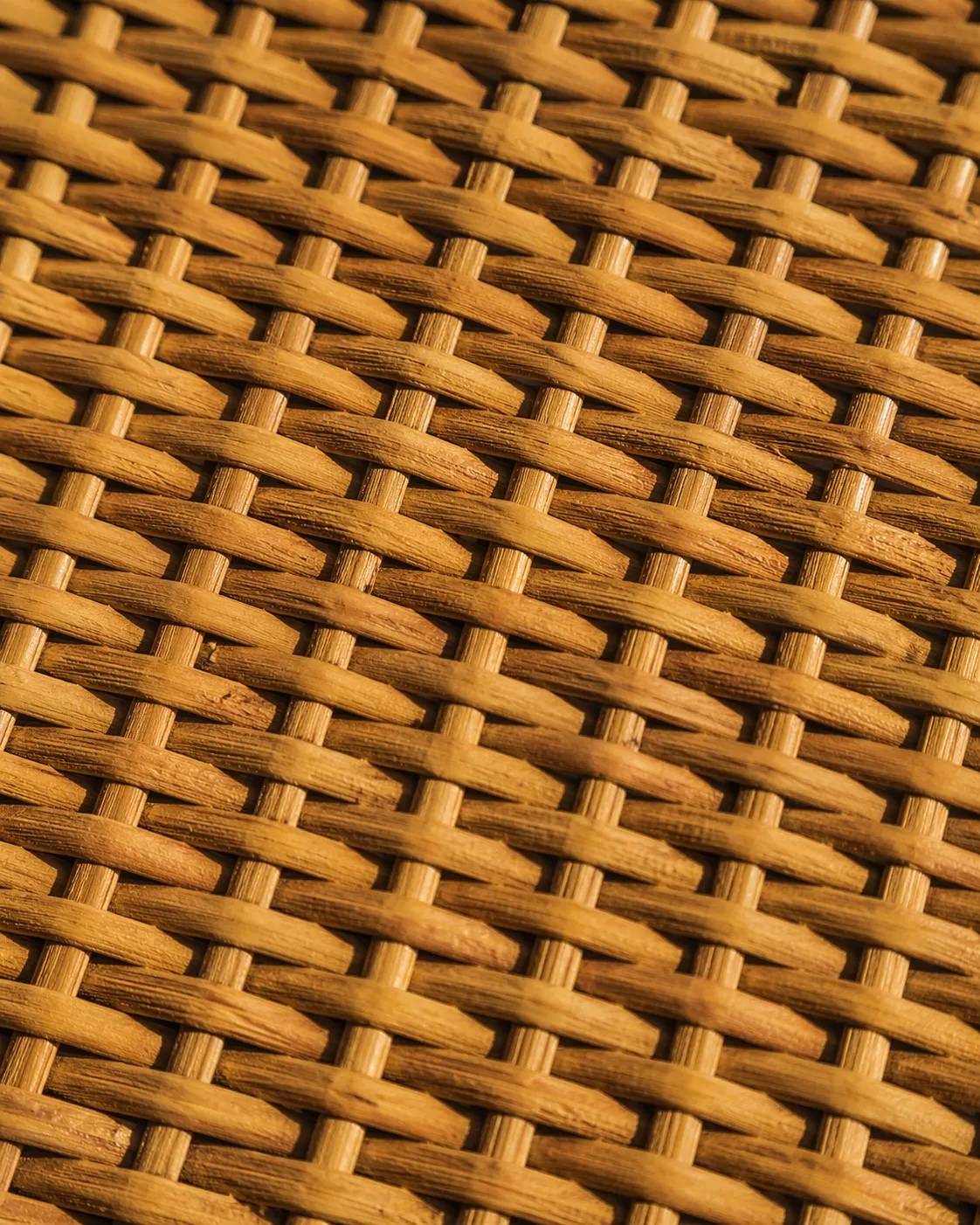
Natural Rattan
10 to 20 years · covered outdoor
Origin & character
Rattan is not a wood, it is the stem of a climbing palm vine (Calamus spp.) that grows in tropical rainforest understory across Kalimantan and Sulawesi. It is harvested without killing the plant, making it one of the genuinely renewable materials used in the workshop. Indonesia supplies approximately 80% of the world's rattan.
The rattan team works with two grades of material: core rattan (the inner pith, used for structural frames) and peel rattan (the outer skin, split into flat strips for weaving). The combination produces furniture that is lightweight relative to its structural strength, a 65 cm hanging chair frame with full weaving typically weighs under 6 kg.
Performance
The primary limitation of natural rattan is UV sensitivity: prolonged direct sunlight bleaches and eventually brittles the fibres. For covered outdoor applications, verandas, pool pavilions, shaded terraces, natural rattan performs reliably for 15 to 20 years. For fully exposed outdoor use, Ubud Atelier offers a UV-coating treatment that extends outdoor viability to 8 to 12 years and changes the appearance minimally.
Best applications
- Lounge chairs
- Hanging chairs
- Decorative headboards
- Room dividers
BALI HIGHLANDS · TREATED
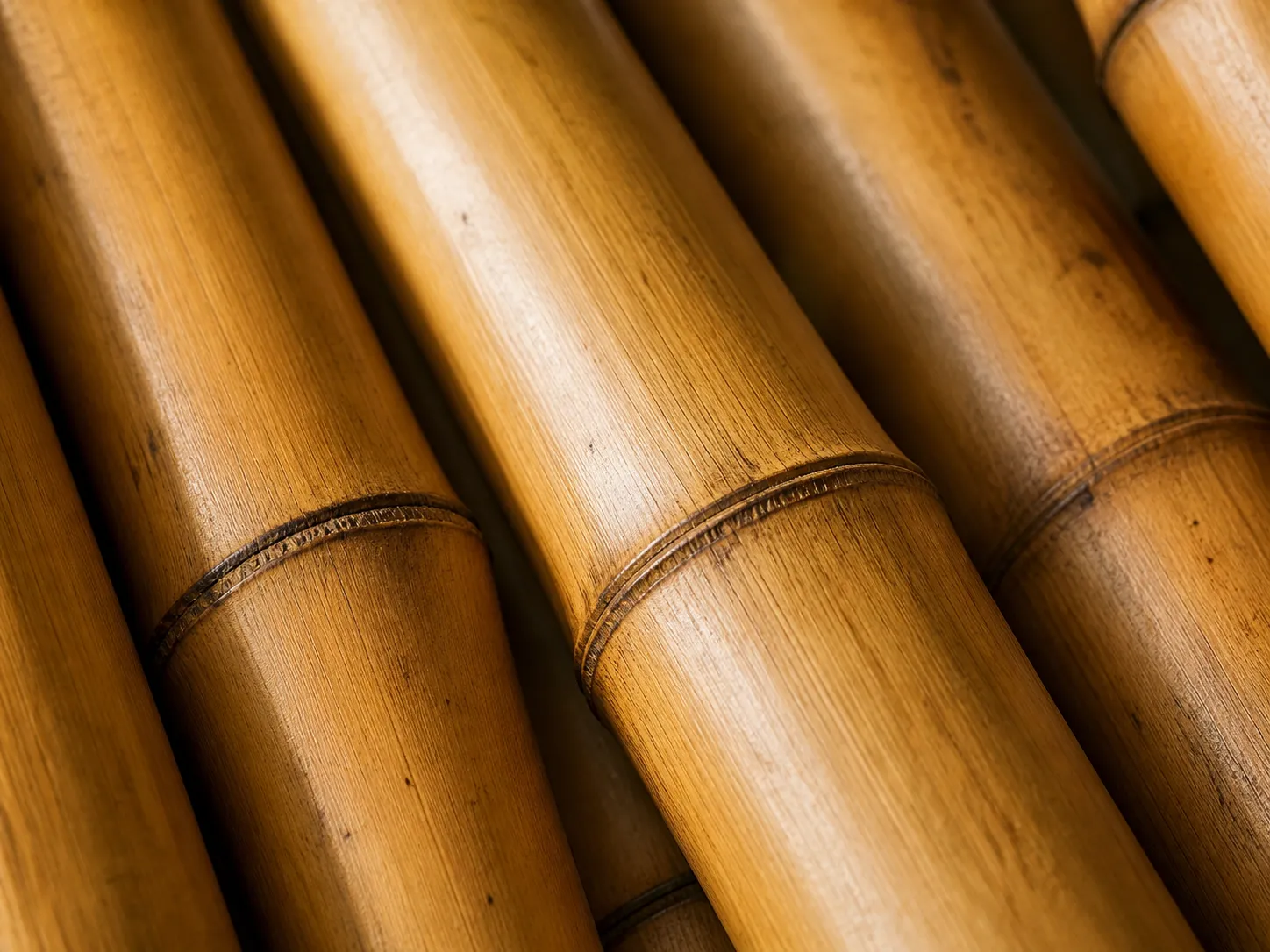
Bamboo
15 to 25 years · treated
Origin & character
Giant bamboo (Dendrocalamus asper), known locally as pring petung, is grown in Bali's central highlands at altitudes between 600 and 1,200 metres. At these elevations, the culms (stems) grow to diameters of 10 to 20 cm with wall thickness sufficient for structural applications. The material is harvested at 3 to 5 years maturity, a growth cycle approximately ten times faster than teak.
Performance
Untreated bamboo is vulnerable to moisture and insect damage. All bamboo used in Ubud Atelier projects is pre-treated through a two-stage process: boiling to remove starches (which attract insects) and a borax-boric acid soak for fungal and termite resistance. Treated bamboo can be used in tropical climates for 15 to 25 years before structural replacement is needed.
The primary application in hospitality projects is architectural: ceiling cladding, pendant light frames, decorative screens between spaces, and canopy structures for pavilions and beach clubs. Bamboo is not typically used for weight-bearing furniture in commercial settings, but it produces some of the most visually distinctive lighting and architectural elements in the workshop's portfolio.
Best applications
- Ceiling cladding
- Pendant lights
- Decorative screens
- Structural canopies
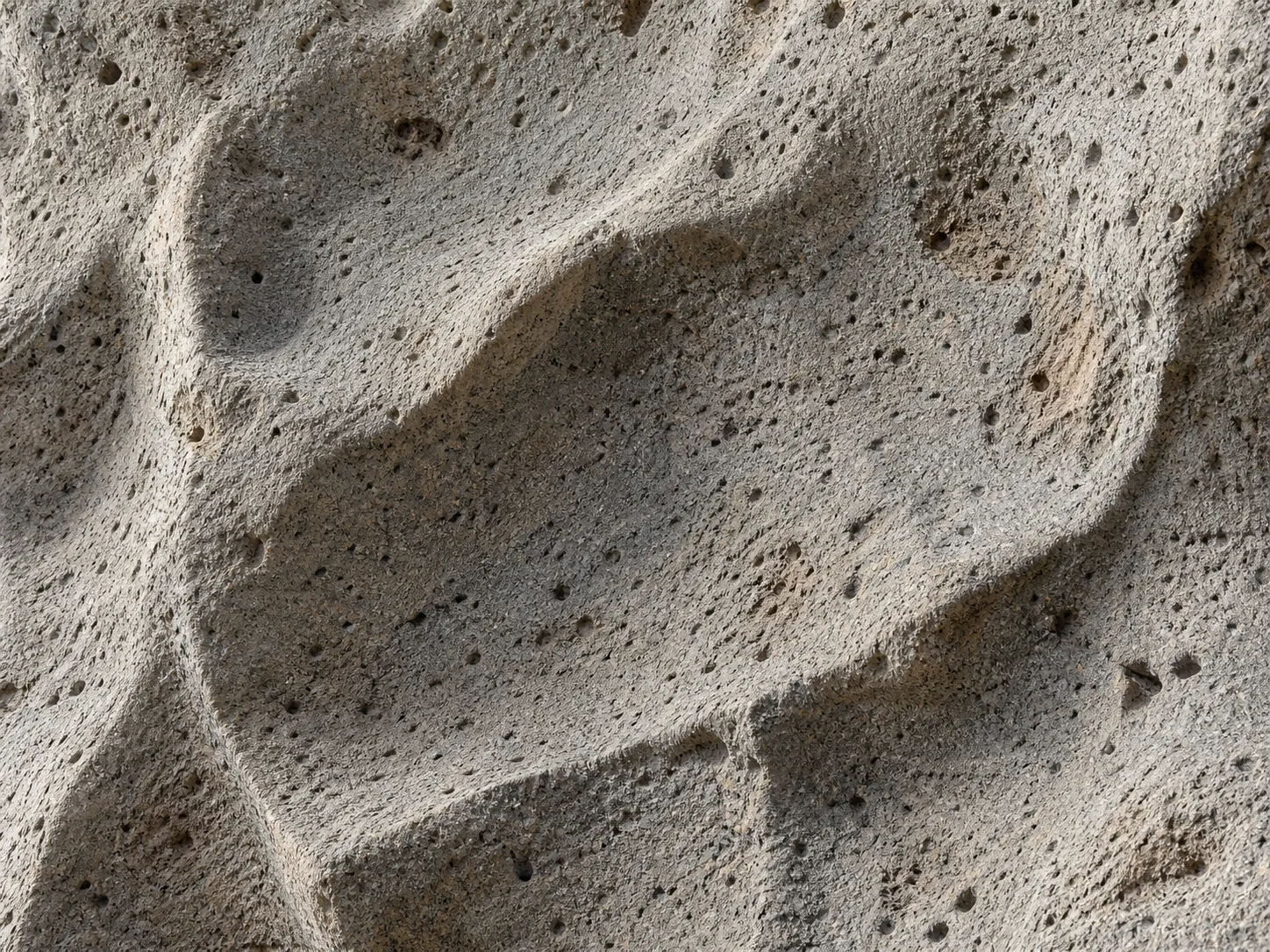
BALI · HAND CARVED
Volcanic Stone (Paras)
50+ years · interior and sheltered
Origin & character
Paras is a pale grey-to-beige volcanic andesite quarried in several locations across Bali, most notably in the Kediri and Tabanan regions. It is a soft stone by geological standards, Mohs hardness 5 to 6, compared to granite at 6 to 7, which is precisely what makes it suitable for hand carving. The detailed relief work seen on Balinese temple architecture is almost universally executed in Paras.
The stone carving team works exclusively with hand tools: chisels, mallets and scrapers of varying profiles. No CNC. The result is surface texture that CNC cannot replicate, the slight irregularity of hand-worked stone that catches raking light differently across a wall or basin surface. Standard lead time for carved stone pieces is 3 to 4 weeks within a broader production run.
Performance
Weight is the primary logistical consideration for Paras stone: a 50 cm side table typically weighs 35 to 45 kg; a 60 cm basin, 40 to 60 kg. Structural floor loading must be confirmed before specifying stone furniture in upper-floor applications. All stone pieces are sealed with a penetrating silicone sealer before shipping; resealing is recommended every 2 to 3 years depending on climate exposure.
Best applications
- Basins & sinks
- Side tables
- Carved wall panels
- Garden elements
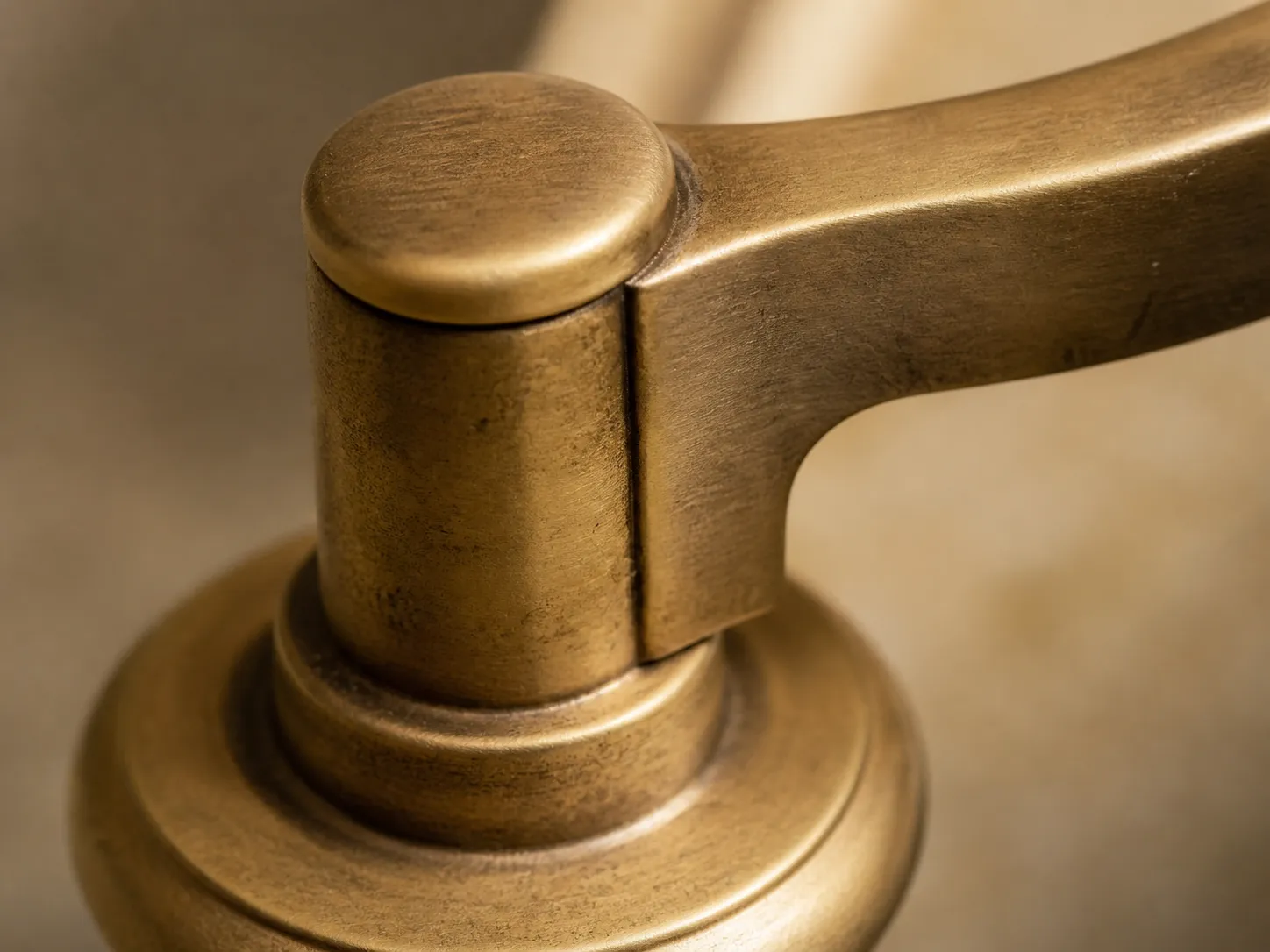
YOGYAKARTA · SOLID ALLOY
Solid Brass Hardware
20 to 40 years · with patina maintenance
Origin & character
All hardware supplied by Ubud Atelier is solid brass, not brass-plated steel or zinc alloy, which are standard in commercial furniture hardware. Solid brass is heavier, more expensive and more durable: the material itself is corrosion-resistant, meaning that surface degradation reveals the same brass underneath rather than exposing a base metal.
Hardware is sourced from a metalworking collective in Yogyakarta with whom the workshop has worked for over fifteen years. Standard finishes available without surcharge: raw (unlacquered, will patinate naturally), brushed satin, aged/patinated and matte black (PVD coating). Custom finishes, satin gold, gunmetal, polished, are available at a 3 to 4 week lead time premium.
Performance
For coastal properties where sea air accelerates corrosion, Ubud Atelier specifies marine-grade brass, a higher-copper alloy composition, combined with a clear lacquer coating. This is the appropriate specification for any property within approximately 500 metres of open ocean. The additional cost is modest; the maintenance saving over a 10-year period is significant.
Best applications
- Drawer pulls & handles
- Bed frame connectors
- Table leg caps
- Light fittings
Not sure which materials suit your project?
Tell us your property type, climate, and aesthetic brief. We'll recommend the appropriate material specification and send physical samples by mail.
We respond within 24 to 48 hours.