Mexico · Caribbean
Custom Bali Furniture for Tulum
Delivered door to door from our workshop in Kerobokan, Bali. 28 to 35 days transit.
Mexico, Caribbean
The market
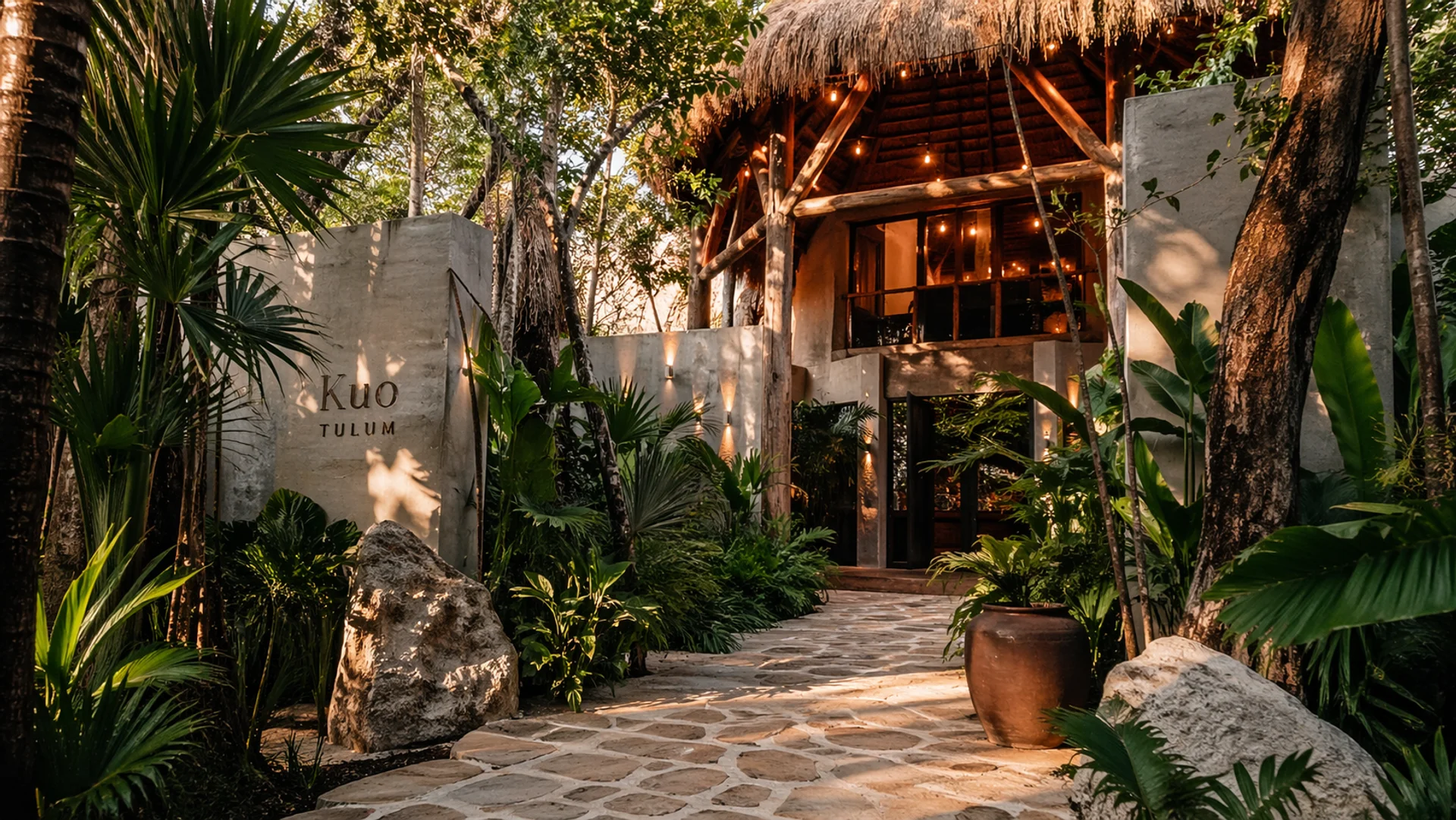
Tulum has become one of the fastest-growing boutique hotel markets in the world. Between 2018 and 2024, the number of lodging properties in the Tulum corridor grew by over 300%, driven by demand for properties that reflect the area's natural aesthetic, cenotes, jungle canopy, limestone coastline, rather than conventional beach resort architecture. The interior brief in Tulum is almost universally natural materials: rattan, bamboo, reclaimed wood, stone. Bali's craft tradition is a direct answer to that brief, at a price point and quality level that Mexican or local artisan supply chains cannot currently match at commercial scale.
Shipping & logistics
From Bali to Tulum, the practical details.
- Transit time
- 28 to 35 days
- Departure port
- Benoa, Bali
- Arrival port
- Port of Manzanillo or Veracruz, Mexico
- Standard incoterms
- CIF Mexican port
- Furniture import duty
- 20 to 25% on furniture (HS 9403); varies by material classification
- VAT / local tax
- 16% IVA (Mexican VAT) applies on import duties and some categories
Routing via Singapore or Port Klang, then through the Panama Canal. Manzanillo is the main Pacific container port; Veracruz serves the Gulf of Mexico side. For Tulum properties, Manzanillo is typically 8 to 10 hours closer by road. Final road transport to the Tulum corridor is 1,100 km from Manzanillo (approximately 12 hours by truck).
Customs & import notes
Mexico does not have a free trade agreement with Indonesia. Furniture from Indonesia is subject to MFN (Most Favoured Nation) rates under WTO rules. Import documentation requirements: commercial invoice, packing list, certificate of origin, bill of lading, SVLK timber certificate. Mexican customs classification can be complex, we strongly recommend engaging a licensed customs broker (agente aduanal) who specialises in furniture import.
Climate considerations
Tropical humid, high heat, extreme humidity, seasonal hurricanes, coastal salt air. Inland jungle properties have different humidity but similar UV exposure.
- Average humidity 80 to 90%, accelerating metal corrosion and timber warping in untreated materials
- Hurricane season June to November; category 5 events (Wilma 2005, Delta 2020) are historically damaging
- Coastal salt air within 2 km of beach; limestone dust inland, both require sealed surfaces
- UV index 11+ during summer months; intense enough to degrade synthetic rattan in one season
Recommended materials for Tulum
Reclaimed Teak
Old-growth density makes reclaimed teak more moisture-resistant than plantation stock, relevant in Tulum's high-humidity environment. The natural, aged aesthetic also aligns with the jungle architectural language prevalent in the market. Reclaimed teak's character markings suit the 'imperfect luxury' aesthetic demanded by Tulum's buyers.
Natural Rattan (UV-coated)
Ubiquitous in Tulum interiors and for good reason, the visual language matches. For outdoor or semi-outdoor applications (open-air restaurants, terraces), UV coating is mandatory. For indoor or covered terrace use in jungle properties, natural rattan without treatment can last 10+ years.
Bamboo
Used primarily for architectural elements: ceiling structures, pendant lights, decorative screens. Treated bamboo performs well in Tulum's humidity. The material also resonates with the eco-conscious buyer profile dominant in the Tulum market.
Why Balinese furniture works for Tulum
The alignment between Bali’s craft tradition and Tulum’s interior design language is almost total. Both draw from the same visual vocabulary: woven rattan, warm-toned hardwood, natural stone, organic forms. Where Tulum’s local artisan supply chain excels at small-scale, handmade pieces, it cannot currently produce at the volume or consistency that a 40-room boutique hotel or a 200-seat beach club requires. Our workshop fills that gap.
Beyond volume, there is a quality argument. The durability requirements for commercial hospitality use, chairs that survive 200 covers per day, sunbeds that resist UV without losing structural integrity, exceed what most Mexican craft workshops are equipped to deliver without significant quality variation. Ubud Atelier’s quality control process, which includes piece-by-piece inspection before loading and full photographic documentation, gives Tulum buyers a level of procurement confidence that local sourcing rarely achieves.
The logistics are more complex than shorter routes (transit via Panama adds 28 to 35 days total), but for projects planned with a 3 to 6 month timeline, this is not a meaningful constraint. We typically recommend booking container space 10 weeks before the desired delivery date to allow for production, loading, transit and Mexican clearance.
What a typical Tulum-Riviera Maya hospitality project would include
Tulum and Riviera Maya projects span three operationally distinct property types. A Tulum jungle boutique hotel (Aldea Zama, La Veleta, or off the Tulum-Coba corridor, 15 to 50 keys) would typically include bedroom FF&E across all keys, restaurant interiors specified in natural materials, and shaded outdoor lounge pieces sized for jungle-property humidity tolerance. A Tulum beach-road property (boutique hotel or beach club, often combined with restaurant) would prioritise outdoor terrace and dining furniture engineered for direct sun and salt exposure. A Playa del Carmen, Akumal, or Bacalar villa or boutique hotel would scale these volumes against the broader Riviera Maya design language, which is more diversified than Tulum’s tightly defined boho-natural aesthetic.
Furniture considerations for Tulum-Riviera Maya climate
Engineer for sustained 80 to 90% humidity, particularly on jungle properties. Tulum’s jungle and inland-corridor properties operate in humidity that materially exceeds most Mediterranean and many Caribbean equivalents, with mold, mildew, and unsealed-joint failure as the practical consequences for unprepared furniture. Pre-shipping humidity acclimatisation, sealed joinery, moisture-resistant adhesives, and ventilation-aware piece design (slatted seat decks rather than enclosed cushion wells, for example) are the durable spec.
Plan outdoor pieces for the June-to-November hurricane season. Quintana Roo has a documented record of severe events including Wilma (2005) and Delta (2020). Outdoor pieces should be either heavy enough to remain anchored or designed for rapid disassembly and indoor storage during named-storm watches. Permanent installation on exposed beach-road terraces should default to weighted teak or stone-base pieces; lighter rattan and bamboo accents should be storage-planned from day one.
Account for jungle pests in interior wood specifications. Interior properties along the jungle corridor, away from the immediate coast, contend with xylophagous insect pressure that the open-air beach properties largely avoid. Dense old-growth reclaimed teak and properly cured plantation teak resist this pressure significantly better than softer hardwoods or untreated bamboo. Where bamboo is specified for architectural elements, factory borate treatment is the practical default.
Buyer checklist for Tulum-Riviera Maya projects
- Plan around the June-to-November hurricane season. Final road-haul timing across the Manzanillo-to-Tulum or Veracruz-to-Tulum corridor can be affected by named storms; build in a buffer for hard opening dates.
- Choose the Manzanillo or Veracruz arrival point in coordination with your customs broker and freight forwarder. Manzanillo is the closer Pacific port for most Tulum properties; Veracruz can suit certain Atlantic-routed shipments. The choice has road-haul and clearance-window implications.
- Confirm dirt-road and final-mile vehicle access for Tulum jungle properties (Aldea Zama and the Tulum-Coba corridor). Several jungle developments are reached via unpaved approaches that require smaller delivery vehicles or staged offloading.
- Plan a humidity acclimatisation window of several days between container offload and final installation, particularly for indoor wood furniture in jungle properties. Skipping this step often produces visible joinery shrinkage in the first dry season.
- For beach-road properties, sequence the outdoor and exterior installation work outside the wettest months and outside the peak hurricane window where the project schedule allows.
- Acknowledge the saturated boutique-hotel competitive landscape in scoping. Tulum’s design-driven hotel segment is dense, and material choices that read as authentic and well-maintained at year-three carry more weight than at-opening visual impact alone.
Questions about Tulum delivery
How complex is furniture import into Mexico?
Mexican furniture import requires a licensed customs broker (agente aduanal). The process is more document-intensive than EU or UAE import. We provide a complete documentation package from Bali, commercial invoice, packing list, certificate of origin, SVLK timber certificate, phytosanitary certificate for natural fibre products, and work with our partner broker in Manzanillo or Veracruz to handle Mexican clearance. Average clearance time is 5 to 10 working days after container arrival.
What about hurricane risk for outdoor furniture?
For any outdoor furniture installed at a Tulum or Riviera Maya property, we recommend specifying heavier teak pieces for fixed terraces and designing storage protocols for lighter rattan and bamboo items ahead of hurricane season. All our furniture is built to be disassembled for storage. We can also specify anti-tip hardware for fixed outdoor pieces on request.
Can we visit the workshop before placing an order?
Yes. We welcome pre-order workshop visits in Kerobokan, Bali. We typically schedule these as a half-day at the workshop, covering the production facility, material selection and a review of the technical drawings. Most Tulum-based buyers who visit convert; the visible quality of the production process removes the primary uncertainty around ordering from a supplier they cannot regularly visit.
What is the total landed cost estimate for a beach club order?
For a typical Tulum beach club order of 80 to 120 pieces (dining chairs, lounge chairs, tables, bar stools, daybeds), total landed cost including production, freight, Mexican import duty, customs brokerage and final-mile trucking typically falls between $80,000 and $150,000 USD depending on piece complexity and material specification. Production cost from the workshop represents 55 to 65% of this total.
Have a project in Tulum?
Tell us your scope, timeline and destination. We confirm logistics and capacity within 48 hours.